Hallwood Side Channel & Floodplain Restoration
Teichert Construction partnered with federal and local agencies, water districts, and environmental organizations to restore ecological processes and enhance flood resilience along the lower Yuba River near Marysville, California. This public-private partnership improved over 150 acres of seasonally inundated riparian floodplain, created approximately 1.7 miles of perennial side channels and 6.1 miles of seasonal side channels, alcoves, and swales. The result: improved salmon habitat, lower water surface elevations, and reduced flood velocities for downstream communities.
Project Origins
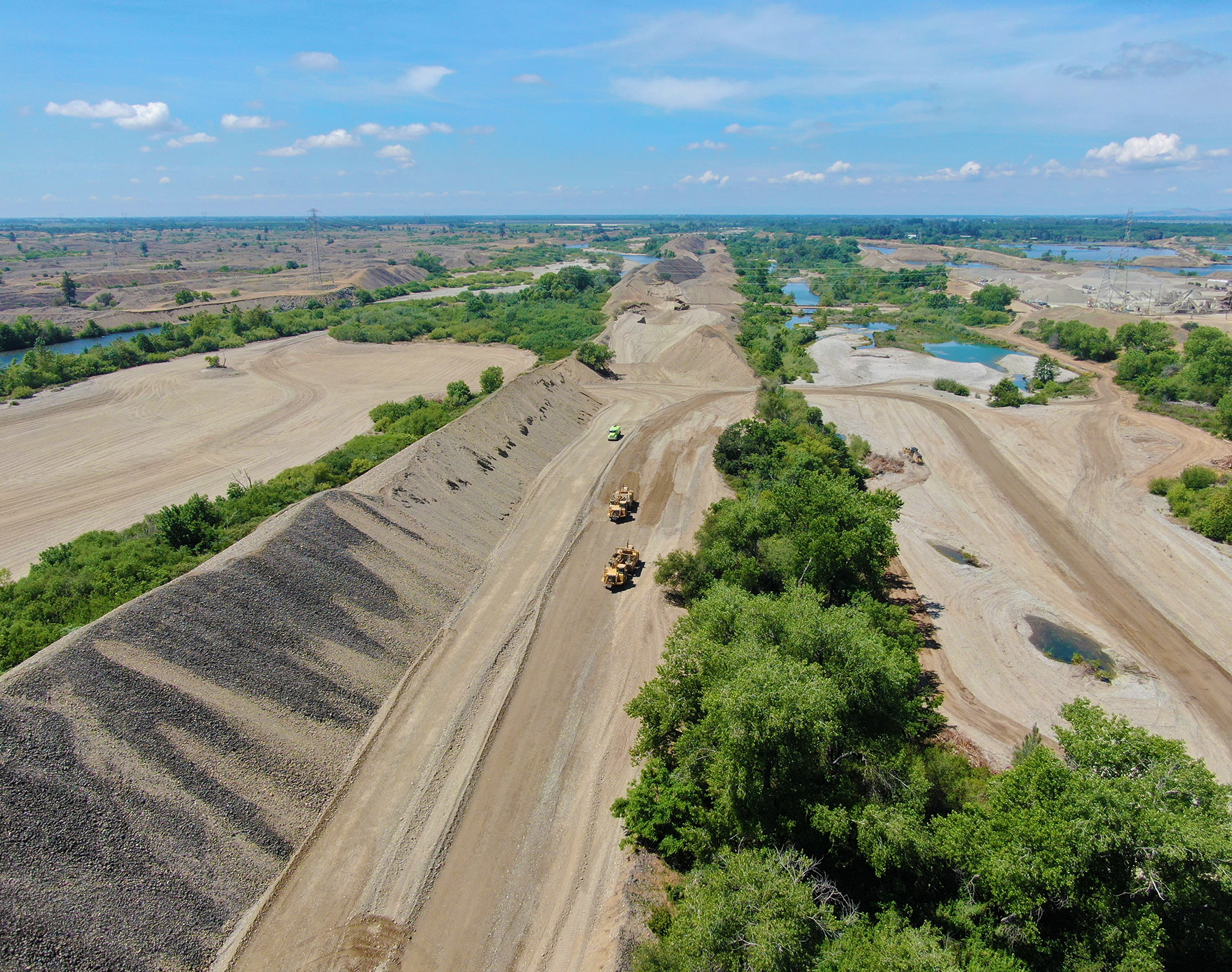
Teichert's involvement began in 2011, when California Fish and Wildlife officials visited the Hallwood aggregate plant to tour restoration work Teichert had already been performing around on-site ponds. Those conversations led to a broader discussion about historical cobble artifacts in the Yuba River channel, including a training wall more than two miles long that had been built to support hydraulic mining. Over time, the wall had significantly disrupted the natural flow of the river and floodplain. With a shared goal of restoring those natural processes, the project moved through several years of feasibility studies, design, and permitting before construction began.
Construction & Innovation
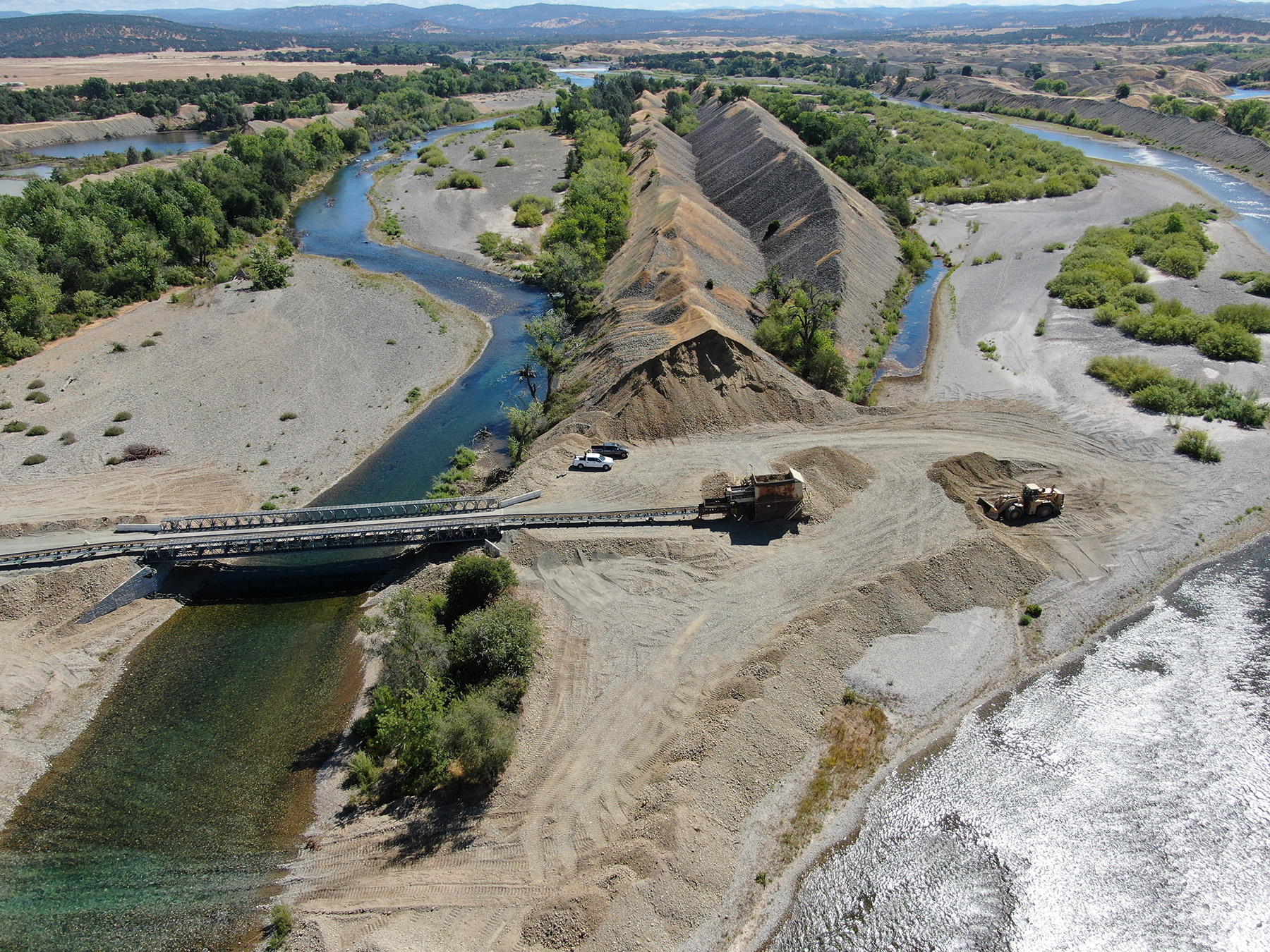
Removing 3.2 million cubic yards of material from the river channel required a highly coordinated approach. Teichert provided equipment, staff, and deep expertise to design access points, install electric conveyors and a bridge, and carefully remove cobble while protecting sensitive habitats. Because the Hallwood aggregate plant sits immediately adjacent to the river, material could be processed on-site using conveyor systems rather than highway trucking. This dramatically lowered project costs and made the massive scope of work economically feasible. The total project cost was approximately $12M, with Teichert's in-kind contribution estimated at $90M.
Environmental Stewardship
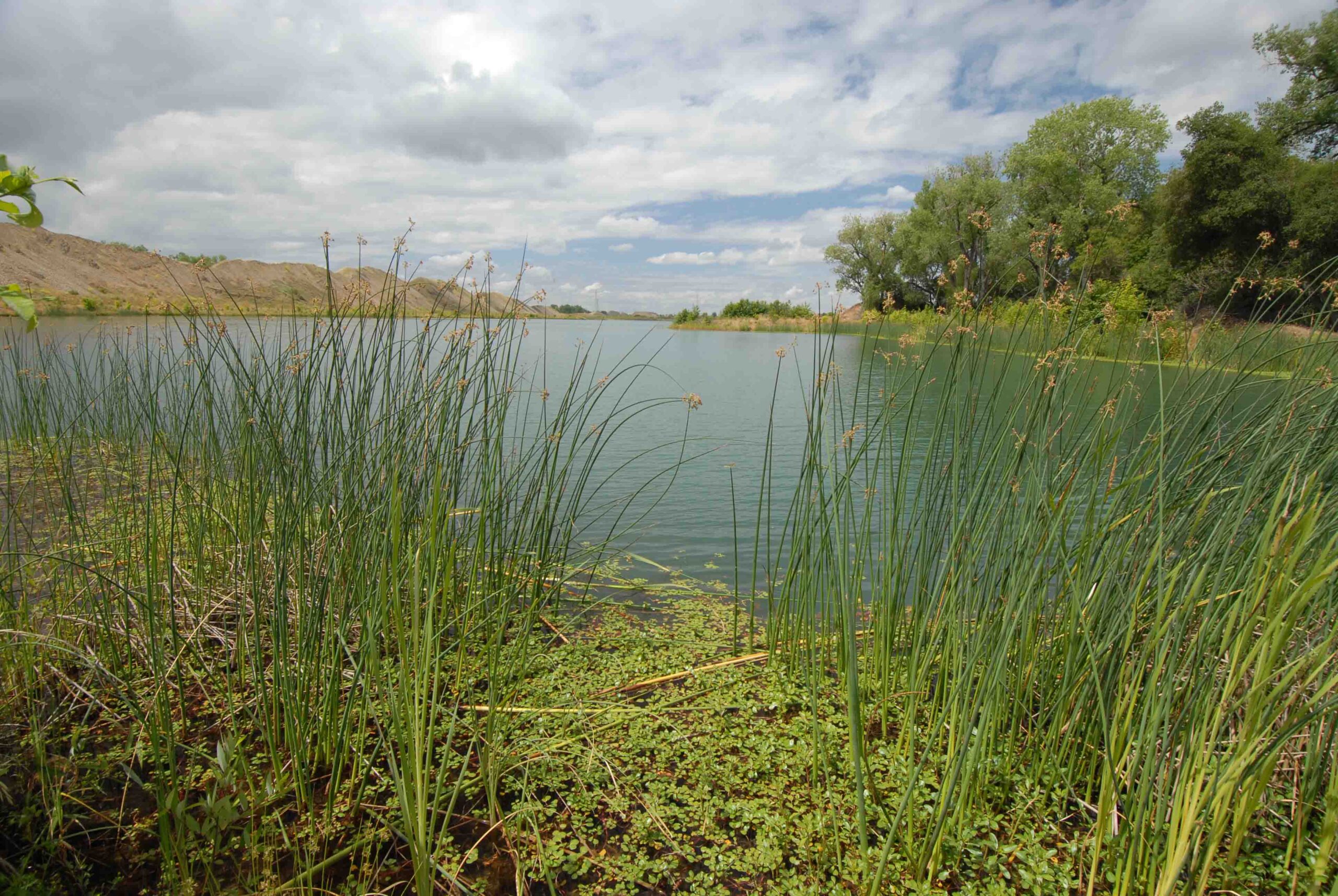
Working in and around the river required exceptional environmental care. Prior to construction, all heavy equipment was cleaned of grease and oils, and hydraulic fluids were replaced with environmentally friendly vegetable oil products. Triangle Land Restoration, a Teichert subsidiary, planted over 25,000 native riparian plants, including willow, cottonwood, oak, elderberry, and sycamore. Many of these were propagated from locally collected seeds at Teichert's own nursery, ensuring plants were well-adapted to site conditions. Harvested rootwads and branchy material were also placed in the river to replicate natural habitats.
Results
The project lowered water surface elevations by 3 feet for the 100-year flood event, providing downstream communities with meaningful protection against flooding. Preliminary fish surveys confirm that steelhead and salmon are already using the restored habitat. Throughout construction, safety collaboration between Teichert and environmental partners produced zero injuries, a reflection of the commitment shared by every stakeholder involved. The Hallwood project stands as a powerful example of what becomes possible when construction expertise, environmental science, and community goals align.